USDT and USDC are both stablecoins built to stay worth one US dollar, but they are issued by different companies, backed and reported in different ways, and used differently. In Nigeria and Ghana, USDT is the one most people are paid in and trade with, while USDC is often the stablecoin that comes from international platforms, US-based apps and some freelance clients.
This guide compares USDT and USDC side by side: who stands behind each coin, how their reserves are reported, which networks they move on, where each one is easier to use, and how to sell either one for naira or cedis on Astro. It is an explainer, not investment advice.
Key points
- USDT is issued by Tether. USDC is issued by Circle. Both aim to hold a value of one US dollar per coin.
- Both issuers say each coin is backed by reserves such as cash and short-term US government debt. They publish different kinds of reports about those reserves.
- USDT is more widely used for everyday trading and P2P in Nigeria and Ghana. USDC is common on international platforms and US-based apps.
- Neither coin is risk-free. Both have briefly traded below $1 in the past, and both issuers can freeze coins at specific addresses.
- Astro supports both USDT and USDC. Nigerian users can sell either for naira, and Ghanaian users can sell either for cedis and withdraw to mobile money.
What is a stablecoin?
A stablecoin is a cryptocurrency designed to keep a steady price, usually by tracking a traditional currency like the US dollar. Bitcoin and Ethereum can rise or fall sharply in a single day. A dollar stablecoin is meant to stay at roughly $1 the whole time.
The two biggest dollar stablecoins work in a similar way. A company issues a new coin when someone deposits dollars with it, and it holds reserves that are meant to cover every coin in circulation. When coins are redeemed for dollars, the company removes them from circulation. Because of this, the price on the market normally stays close to $1.
For people in Nigeria and Ghana, stablecoins have become a common way to receive payments from abroad, hold value in dollars, and move money between apps. The older Astro article on why stablecoins are gaining popularity in Nigeria covers the bigger picture, and the article on why Ghanaians are turning to USDT looks at the cedi side.
USDT vs USDC at a glance
| USDT | USDC | |
|---|---|---|
| Issuer | Tether | Circle |
| Aim | 1 USDT = $1 | 1 USDC = $1 |
| Reserves (as described by the issuer) | Mostly US Treasury bills and cash-like assets, plus other assets | Cash and short-term US Treasury holdings |
| Reserve reports | Periodic attestation reports | Regular attestation reports |
| Common networks | Tron (TRC20), BNB Smart Chain (BEP20), Ethereum (ERC20) and others | Ethereum, Solana and several other networks |
| Use in Nigeria and Ghana | Very common for trading, P2P and payments | Less common day to day; often arrives from international platforms |
| Can the issuer freeze coins? | Yes, at specific addresses | Yes, at specific addresses |
Who issues USDT and USDC?
USDT (Tether)
USDT, often just called Tether, is the oldest of the large dollar stablecoins and has the biggest supply in circulation. It is issued by Tether, a company that has operated since 2014. Because it has been around for so long and is listed almost everywhere, USDT is the default dollar coin on many exchanges and in most P2P markets across Africa.
Tether says USDT is backed by reserves made up mostly of US Treasury bills and other cash-like assets, along with some other investments. It publishes attestation reports from an accounting firm. In earlier years, Tether faced criticism over how clearly it reported its reserves, and it has since moved to more regular reporting.
USDC (Circle)
USDC is issued by Circle, a US-based financial technology company. Circle says USDC is backed by cash and short-term US Treasury holdings, and it publishes regular attestation reports on those reserves. USDC is popular with US-based platforms, payment companies and apps that want a dollar coin with a strong focus on regulation and reporting.
How USDT and USDC differ in practice
1. Liquidity and everyday use
Liquidity means how easily a coin can be bought or sold without trouble. In Nigeria and Ghana, USDT has much more day-to-day activity. Most P2P traders, payment requests and crypto cash-out services quote prices in USDT first. That makes USDT the more familiar coin for local trading.
USDC is still easy to sell on platforms that support it, including Astro, but some local traders and smaller apps only work with USDT.
2. Networks
Both coins exist on several blockchains, and each version only lives on its own chain. USDT is heavily used on Tron (TRC20) in Africa because transfers there usually have low network fees. It is also widely used on BNB Smart Chain (BEP20) and Ethereum (ERC20). The guide to USDT TRC20 vs BEP20 vs ERC20 explains those three in detail.
USDC is mostly used on Ethereum, Solana and a set of other networks. It is not as tied to Tron as USDT is. The networks you can use for each coin depend on the app, so always check which networks your Astro wallet shows for USDC before you send any.
3. Reserves and reporting
Both issuers say their coins are fully backed. The difference people usually point to is the type of assets and the style of reporting. Circle describes USDC reserves as cash and short-term US government debt. Tether describes USDT reserves as mostly US Treasury bills and cash-like assets, with a smaller share in other investments.
Neither description removes risk entirely, so it is worth reading both issuers’ reports yourself.
4. Price stability
Both coins normally stay very close to $1, but neither is guaranteed. USDC briefly fell well below $1 in March 2023, when part of its cash reserves was held at a US bank that collapsed. It recovered within days once the reserves were confirmed safe. USDT has also briefly slipped below $1 during market panics before recovering.
5. Freezing
Unlike Bitcoin, both USDT and USDC are controlled by companies that can freeze coins held at specific addresses, usually when asked by law enforcement or when funds are linked to theft or fraud. It is one more reason to avoid accepting stablecoins from strangers or suspicious sources.
Which stablecoin should you use in Nigeria or Ghana?
There is no single right answer. It depends on what you are doing. A simple way to think about it:
- If you trade locally or get paid through P2P: USDT is usually the easier choice, because more people and apps use it.
- If an international client, platform or US-based app pays you: accept whichever coin they send. If they offer both, pick the one you can receive on a network your wallet supports.
- If you care most about how reserves are described: some people choose USDC for its simpler reserve description. Read both issuers’ reports and decide for yourself.
Whichever coin you choose, the most important rule is the same: use the right network on both sides of every transfer. Crypto sent on the wrong network, or sent as a different coin, can’t be recovered. Sending USDC to a USDT address, or the other way round, is one of the most common ways people lose money. The guide on what to do if you sent crypto on the wrong network explains why.
Also be careful of offers that sound too good. The flash USDT scam uses fake tokens that look like real USDT in a wallet but can’t be sold. Only count coins as received once they show in a wallet or app you trust.
How to switch between USDT and USDC on Astro
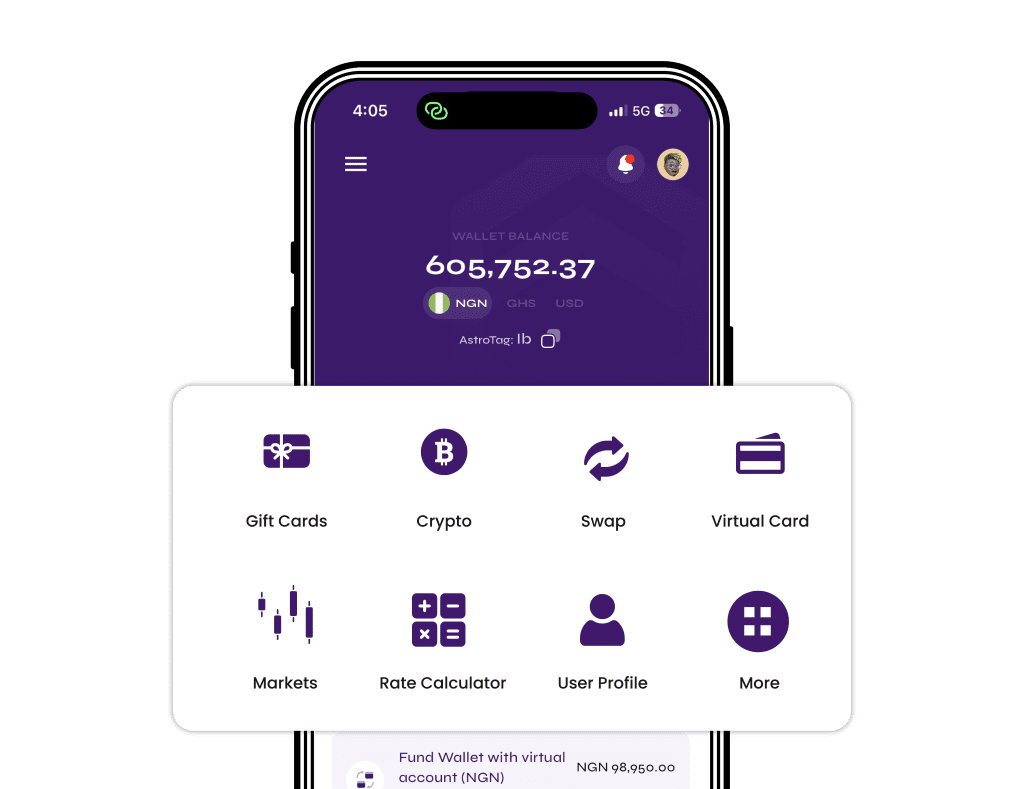
If you hold one stablecoin and need the other, you don’t need to send them out to another exchange. Astro’s Instant Swap lets you swap between supported coins inside the app:
- Open the Astro app and go to Swap.
- Pick the coin you have (for example USDC) and the coin you want (for example USDT).
- Enter the amount and review the quote, including any swap fee shown.
- Confirm the swap.
Swaps between coins pass on the swap fee from Astro’s liquidity provider, and the app shows what you will receive before you confirm. The guide to Instant Swap on Astro walks through the full flow.
How to sell USDT or USDC for naira or cedis on Astro
Astro supports both USDT and USDC, and both can be sold for local currency. Signing up doesn’t require ID, and crypto trading and crypto withdrawals need no ID verification. Some other features do need verification; the guide on what needs verification on Astro lists them.
In Nigeria: sell for naira
- Deposit USDT or USDC into your Astro wallet, choosing the network shown in the app and copying the matching address.
- Open the coin’s wallet and choose to sell.
- Enter the amount and check the naira value at the current rate.
- Confirm with your 5-digit transaction PIN or Face ID.
- Withdraw to a Nigerian bank account, including OPay and PalmPay.
Eligible Nigerian payouts can arrive in as fast as 60 seconds under normal conditions, though banks, network congestion and maintenance can affect timing. Payouts also run on weekends and public holidays. The least naira withdrawal is ₦300. For a longer walkthrough, see how to sell USDT in Nigeria and where to sell USDC for naira. Nigerian users can also buy USDT with naira in the app.
In Ghana: sell for cedis and withdraw to mobile money
- Deposit USDT or USDC into your Astro wallet on the network shown in the app.
- Choose to sell for cedis and check the cedi value shown.
- Confirm with your PIN or Face ID.
- Withdraw your cedis to MTN MoMo, Telecel Cash (formerly Vodafone Cash) or AirtelTigo Money.
Ghana withdrawals go to mobile money only for now and are processed by the Astro team, so timing can vary. Ghanaian users can’t fund a cedis wallet directly at the moment; cedis come from selling crypto or gift cards. The guides to selling USDT in Ghana and selling USDC for Ghana cedis have more detail.
Frequently asked questions
What is the main difference between USDT and USDC?
They are issued by different companies. USDT is issued by Tether and USDC by Circle. Both aim to be worth $1, but they differ in how their reserves are described and reported, which networks they are most used on, and how widely they are accepted.
Is USDC safer than USDT?
Some people see USDC as simpler because its reserves are described as cash and short-term US government debt. Others trust USDT for its long track record. Neither coin is risk-free, and both have briefly traded below $1 in the past. This is not investment advice.
Which is more popular in Nigeria and Ghana?
USDT is far more common for everyday trading, P2P and payments in both countries. USDC is often received from international platforms and US-based apps.
Can I send USDC to a USDT address?
No. Crypto sent as a different coin, or on the wrong network, can’t be recovered. Always use the USDC address for USDC and the USDT address for USDT, on the matching network.
Does Astro support both USDT and USDC?
Yes. Astro supports both. You can hold them, swap between them with Instant Swap, and sell them for naira in Nigeria or cedis in Ghana.
Which networks can I use to send USDC to Astro?
Check the networks your Astro USDC wallet shows when you tap Receive, and only send on one of those. For USDT, Astro supports TRC20, BEP20 and ERC20.
Is the rate for USDT and USDC the same?
They are both close to $1, but the naira or cedi rate for each can differ slightly. Check the amount shown in the app before you confirm a sale. The article on why the USDT to naira rate changes explains what moves local rates.
Can USDT or USDC lose its peg?
It can happen briefly. USDC dropped below $1 for a few days in March 2023 during a US banking problem, and USDT has dipped during market panics. Both recovered, but a stablecoin depends on its issuer and reserves.
USDT and USDC both do the same basic job: they hold a dollar value you can move quickly. USDT is the everyday choice in Nigeria and Ghana, while USDC is common from international platforms. Whichever one you hold, download the Astro app to swap between them, hold them, or sell them for naira or cedis.