The dollar to naira rate is the price of actual US dollars, in a bank, a domiciliary account or as cash, while the USDT to naira rate is the price of USDT, a digital token built to track the dollar. The two prices usually move together, but they are set in different markets, by different buyers and sellers, so they are rarely identical at any given moment.
This guide explains how the two markets work, why a gap can open between them, what each one is good for, and what to check before you choose one or the other. It focuses on the difference between the two. If you want to know why the USDT price moves from day to day, read why the USDT to naira rate changes.
Key points
- “Dollar to naira” means the price of real US dollars. “USDT to naira” means the price of a dollar-linked crypto token.
- The two rates follow each other closely, but they come from separate markets, so small gaps are normal.
- Dollars move through banks, licensed dealers and cash. USDT moves on blockchains and can be traded at any hour, any day.
- Each has its own risks: bank rules and cash handling for dollars, network mistakes and scams for USDT.
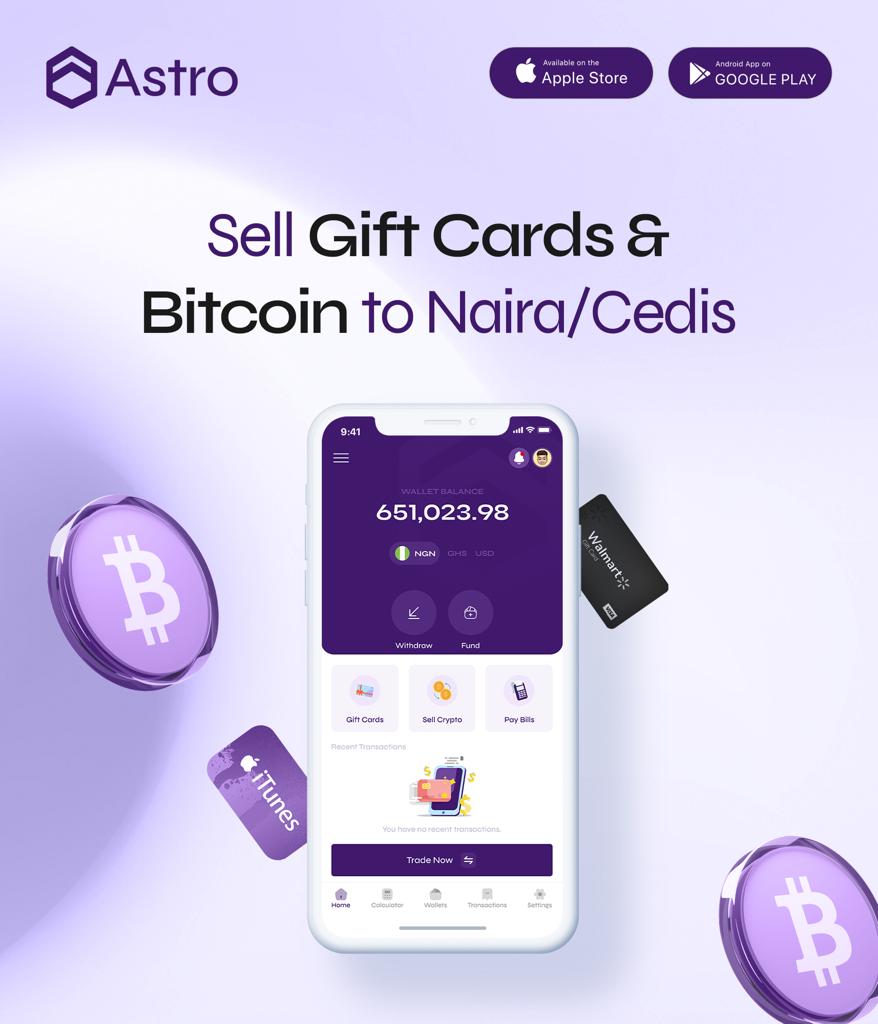
- On Astro, Nigerian users can buy USDT with naira and sell USDT for naira. Check the live price in the app before you trade.
What “dollar to naira” actually means
When people in Nigeria talk about the dollar rate, they usually mean one of a few different prices for the same currency:
- The official rate: the rate in Nigeria’s official foreign exchange market, where banks and authorised dealers trade dollars. Many businesses and the media use it as a reference point.
- The cash or street rate: the price at which bureau de change operators and informal dealers buy and sell physical dollar notes. People often call this the parallel market.
- Bank and domiciliary transfers: what a bank charges or pays when it converts dollars in a domiciliary account to naira, or naira to dollars for an approved purpose such as school fees.
Each of these is a “dollar to naira” rate, and they don’t always match. They depend on who is selling, who is buying, what paperwork is needed and how quickly the money can move. This article does not quote any of those numbers, because they change often and an old figure can mislead.
What “USDT to naira” actually means
USDT, also called Tether, is a stablecoin. It is a crypto token designed to hold a value close to one US dollar. It is not a dollar bill, and it is not money in a US bank account. It is a digital asset that lives on blockchains such as Tron (TRC20), BNB Smart Chain (BEP20) and Ethereum (ERC20).
The USDT to naira rate is the price at which USDT trades against naira on crypto platforms and in peer-to-peer (P2P) markets. Because USDT is meant to track the dollar, the people buying and selling it look at the dollar market when deciding what to pay. That is why the two rates move in the same direction most of the time.
For a broader look at why stablecoins became popular in Nigeria in the first place, see this earlier piece on USDT vs naira and the rise of stablecoins.
Dollar to naira vs USDT to naira: side by side
| Dollar to naira | USDT to naira | |
|---|---|---|
| What you are trading | US dollars (bank balance or cash notes) | USDT, a dollar-linked crypto token |
| Who issues it | The US Federal Reserve (it is the national currency) | Tether, a private company |
| Where it trades | Banks, authorised dealers, bureaux de change, informal cash dealers | Crypto apps, exchanges and P2P markets |
| Trading hours | Mostly banking hours; slower on weekends and public holidays | Any hour, any day |
| How it moves | Bank transfers, SWIFT, or physical cash | Blockchain transfers to a wallet address on a chosen network |
| Paperwork | Often needs a bank account, ID and sometimes a stated purpose | Varies by platform; on Astro, crypto trading doesn’t need ID |
| Main risks | Bank delays, limits, counterfeit notes, theft when carrying cash | Wrong-network mistakes, scams, the small chance USDT drifts from one dollar |
Why the two rates are not always the same
If USDT is designed to equal one dollar, why doesn’t one USDT always fetch exactly the same naira as one dollar? There are a few reasons.
1. They are separate markets
The people selling dollars at a bank are not the same people selling USDT on a crypto app. Each market has its own supply and demand. When demand for USDT rises faster than demand for cash dollars, for example because many freelancers want to hold their earnings in stablecoins, the USDT price can sit a little above the dollar price for a while. The reverse can happen too.
2. Access is different
Getting dollars through a bank can involve forms, limits and waiting, while USDT can take minutes on an app. People pay a little more, or accept a little less, for that convenience, which shows up as a small gap between the two rates.
3. Timing
Crypto markets never close. Bank FX desks do. When something happens on a Saturday night, the USDT price can react straight away while the official dollar rate waits until Monday. For a short period, the two can look further apart than usual, then settle closer together once both markets are open.
4. USDT is not exactly one dollar
On global markets, USDT usually trades very close to one dollar, but it can move slightly above or below. These moves are normally tiny.
5. Buy and sell prices
Every platform, bank and dealer shows two prices: what it pays you and what it charges you. When someone compares “the dollar rate” with “the USDT rate”, they are sometimes comparing a buy price with a sell price without realising it. Always compare like with like: the sell price if you are selling, the buy price if you are buying.
What each one is good for
When the dollar itself is the better fit
- Paying an overseas bill through official channels, such as school fees or a supplier invoice that must come from a bank.
- Keeping savings inside the banking system, where you want a bank statement and the protections that come with a regulated account.
- Travel, where you need physical cash or a bank card abroad.
When USDT can be the better fit
- Receiving payment from abroad: many freelancers and remote workers are paid in USDT because it moves quickly across borders. This list of freelance platforms that pay Nigerians in dollars covers some common options.
- Holding a dollar-linked balance without a domiciliary account: USDT can sit in a crypto wallet until you decide to sell.
- Converting outside banking hours: on Astro, payouts also run on weekends and public holidays, although bank delays or maintenance can still affect timing. See selling crypto on weekends in Nigeria for how that works.
Neither option is right for everyone. It depends on what you need the money to do.
Risks to understand on both sides
Dollar risks
- Bank processes can be slow, and banks can set limits on how much you can move.
- Carrying cash brings the risk of theft and counterfeit notes.
- Informal cash dealers are not supervised the way banks are, so disputes are hard to resolve.
USDT risks
- Network mistakes: USDT sent on the wrong network, or sent as a different coin, cannot be recovered. Read USDT TRC20 vs BEP20 vs ERC20 before your first transfer.
- Scams: offers of a USDT rate far above the market, fake payment screenshots and “agents” who ask you to send first are common. No platform can promise zero fraud risk, so trade inside an app rather than with strangers.
- Issuer risk: USDT depends on Tether keeping its token close to one dollar. It has mostly done so, but it is still a private company, not a central bank.
- Not legal tender: USDT is not naira and not a US dollar. Shops and banks in Nigeria don’t accept it as payment, so you need to sell it for naira to spend it locally.
How to check the USDT to naira price on Astro
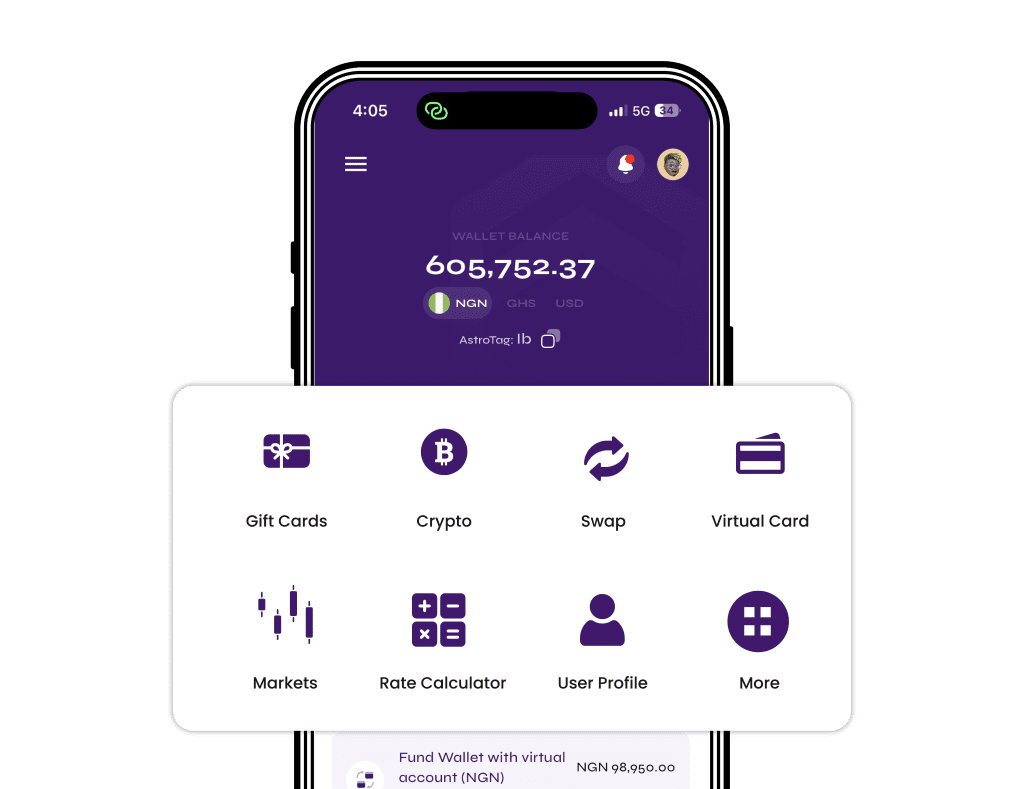
Astro shows the USDT price inside the app, at the moment you trade. The website’s rates page lists gift card rates only, so for crypto, the app is the place to look.
- Open the Astro app and sign in.
- Go to your USDT wallet.
- Tap Sell to see what you would receive in naira, or Buy to see what you would pay in naira for USDT.
- Enter an amount. The app shows the figure before you confirm.
- Only confirm if you are happy with that figure. Prices move, so the number at the moment you confirm is the one that counts.
On Astro, rates follow the market. They do not depend on the time of day or the day of the week, so there is no special hour that gets a better price.
How to sell USDT for naira on Astro
- Deposit USDT: open your USDT wallet, choose the network (TRC20, BEP20 or ERC20) and copy the deposit address. Send from your exchange or wallet on that same network.
- Sell: once the deposit shows in your wallet, tap Sell, enter the amount and check the naira figure.
- Withdraw: send the naira to a supported Nigerian bank account, including fintech banks such as OPay and PalmPay.
Eligible payouts can arrive in as fast as 60 seconds under normal conditions, though blockchain confirmations, bank delays and maintenance can affect timing. A withdrawal that is already processing can’t be cancelled, and if a withdrawal fails, everything taken is refunded, including the withdrawal fee. The full walkthrough is in how to sell USDT in Nigeria, and if you want the naira to land in a fintech account, see selling USDT to OPay or PalmPay.
Nigerian users can also go the other way and buy USDT with naira in the app, which many sell-only platforms don’t offer.
Frequently asked questions
Is USDT the same as the US dollar?
No. USDT is a crypto token issued by Tether that is designed to track the US dollar. It usually trades very close to one dollar, but it is not US currency and is not held in a US bank account in your name.
Why is the USDT to naira rate different from the dollar to naira rate?
They are traded in separate markets with different buyers, sellers, opening hours and costs. USDT also moves slightly around one dollar on global markets. Small gaps between the two prices are normal.
Which is higher, the dollar rate or the USDT rate?
It changes. Sometimes USDT trades slightly above the dollar rate in Nigeria and sometimes slightly below, depending on demand in each market. Check live prices rather than relying on a rule of thumb.
Does the official exchange rate affect the USDT price?
Often, yes. Traders watch the official FX market, so when it moves, USDT prices tend to adjust in the same direction. They don’t always move by the same amount or at the same time.
Where can I see the USDT to naira rate on Astro?
In the app. Open your USDT wallet and tap Sell or Buy to see the naira figure before you confirm. The website’s rates page shows gift card rates only.
Can I buy USDT with naira on Astro?
Yes. Nigerian users can buy USDT with naira and sell USDT for naira in the Astro app.
Do I need a domiciliary account to hold USDT?
No. USDT is held in a crypto wallet, not a bank account. On Astro, you can deposit USDT and keep it in your wallet without selling straight away.
Do I need ID to sell USDT on Astro?
No. Sign-up doesn’t ask for ID, and crypto trading and crypto withdrawals don’t need verification. Some other features, such as Nigerian bank accounts, do require it.
Is it safe to buy USDT from someone on social media?
It carries real risk. Fake payment alerts, “send first” requests and rates far above the market are common tricks. Using an app with a clear process reduces that risk, although no platform can remove fraud risk completely.
The dollar and USDT both track the same currency, but they live in different markets with different rules. If USDT suits how you get paid or how you want to hold value, download the Astro app, check the live USDT price and trade when the figure works for you.